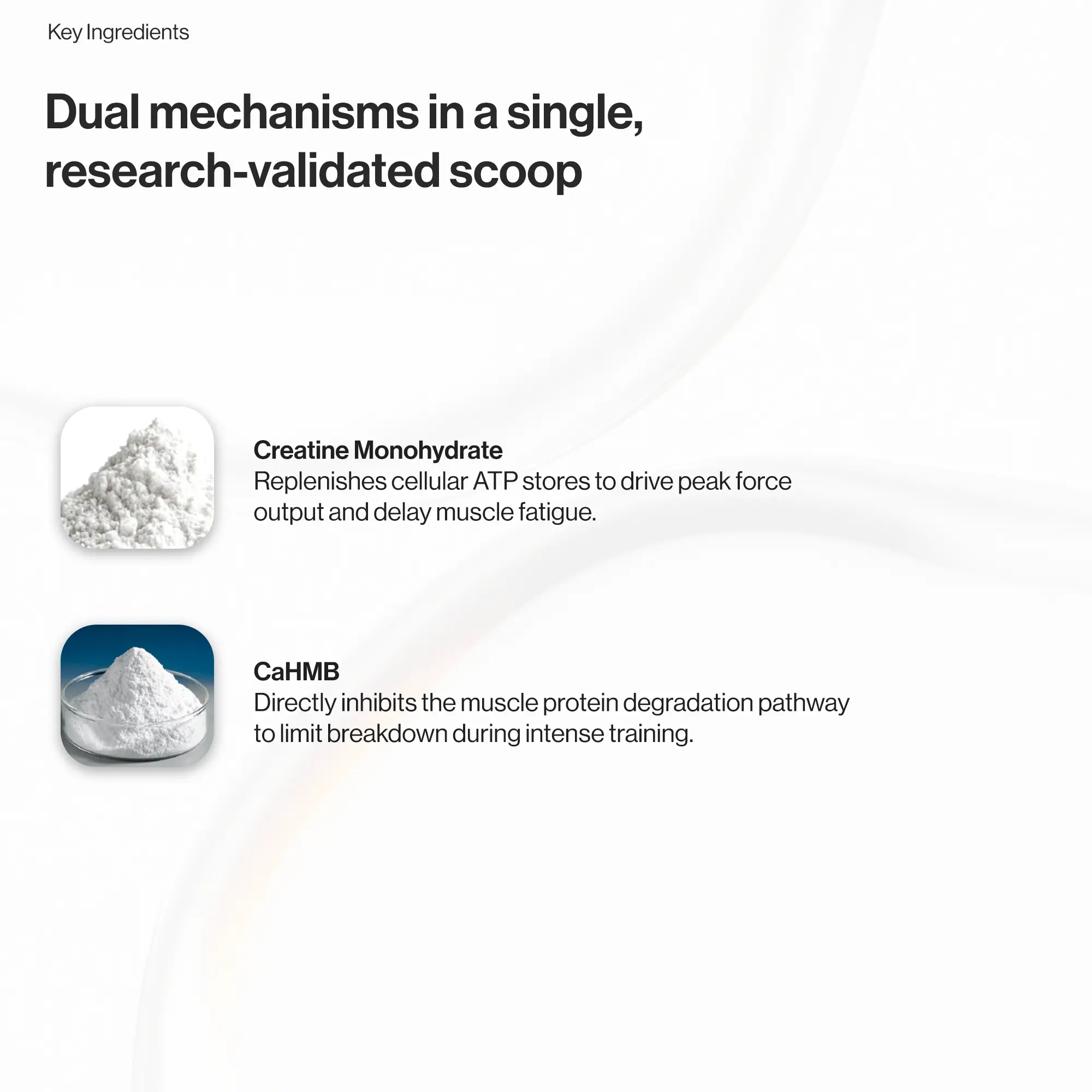
Creatine increases the capacity to produce ATP, while HMB reduces the net catabolic toll on the muscles. The result is more work done and less muscle broken down per training session.
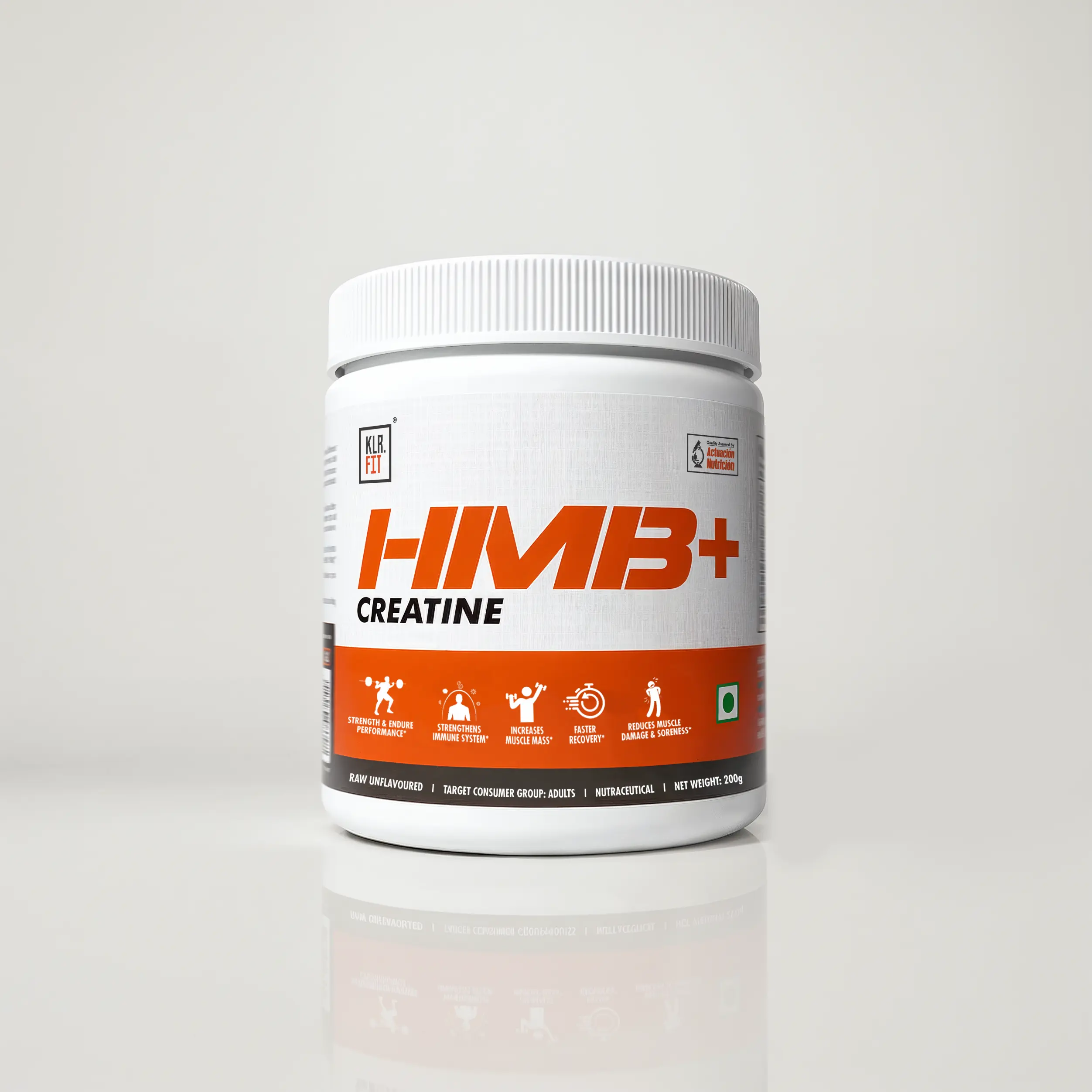
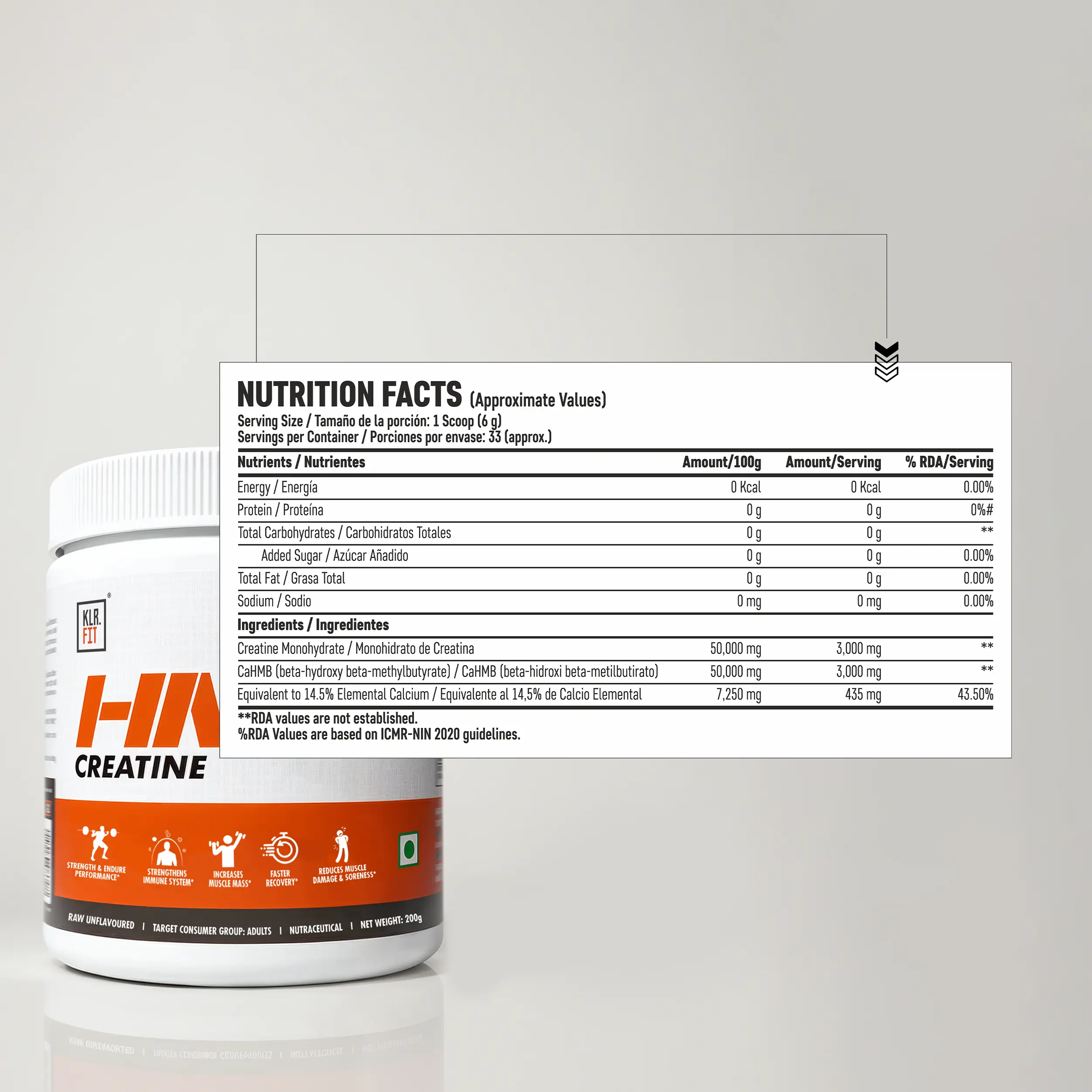

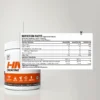
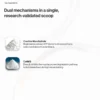
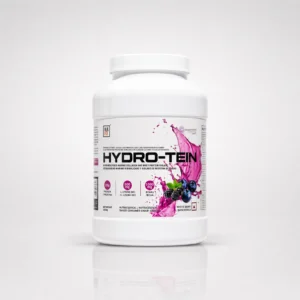
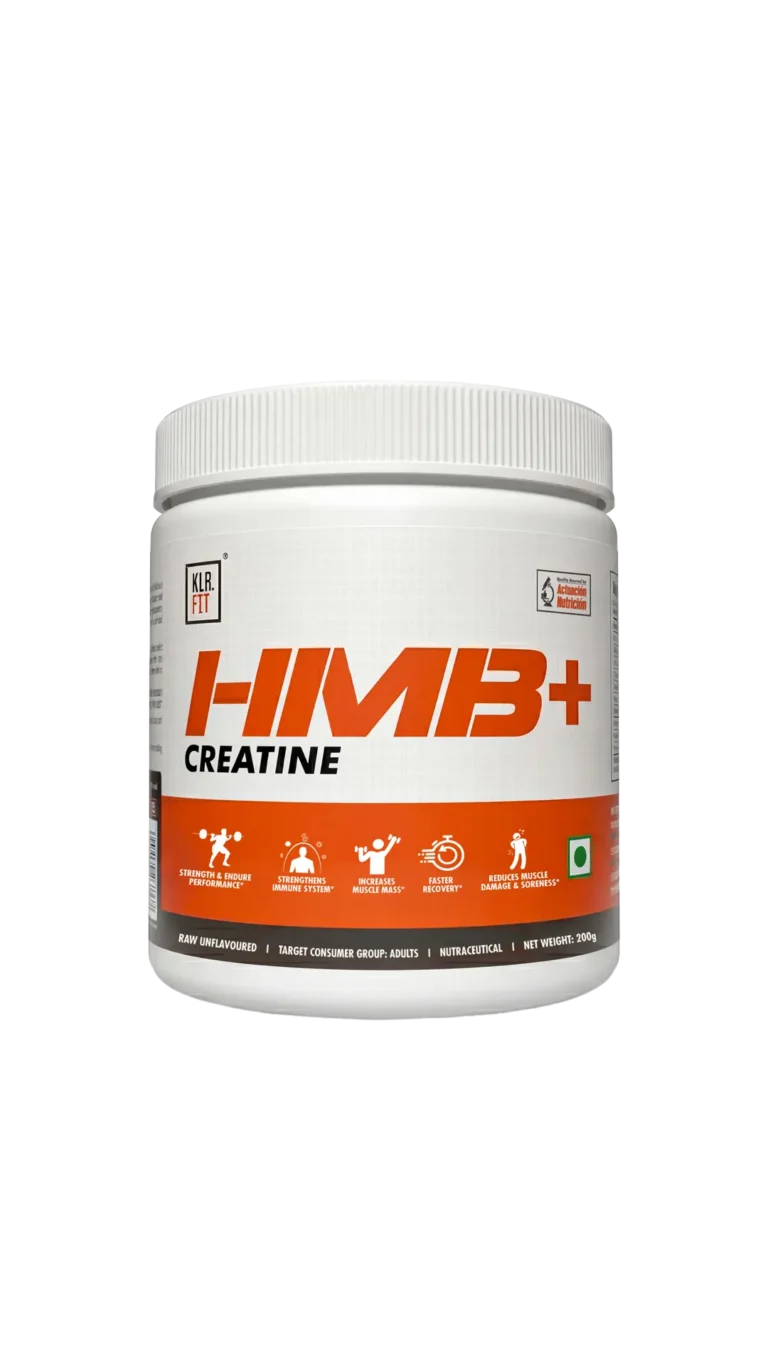
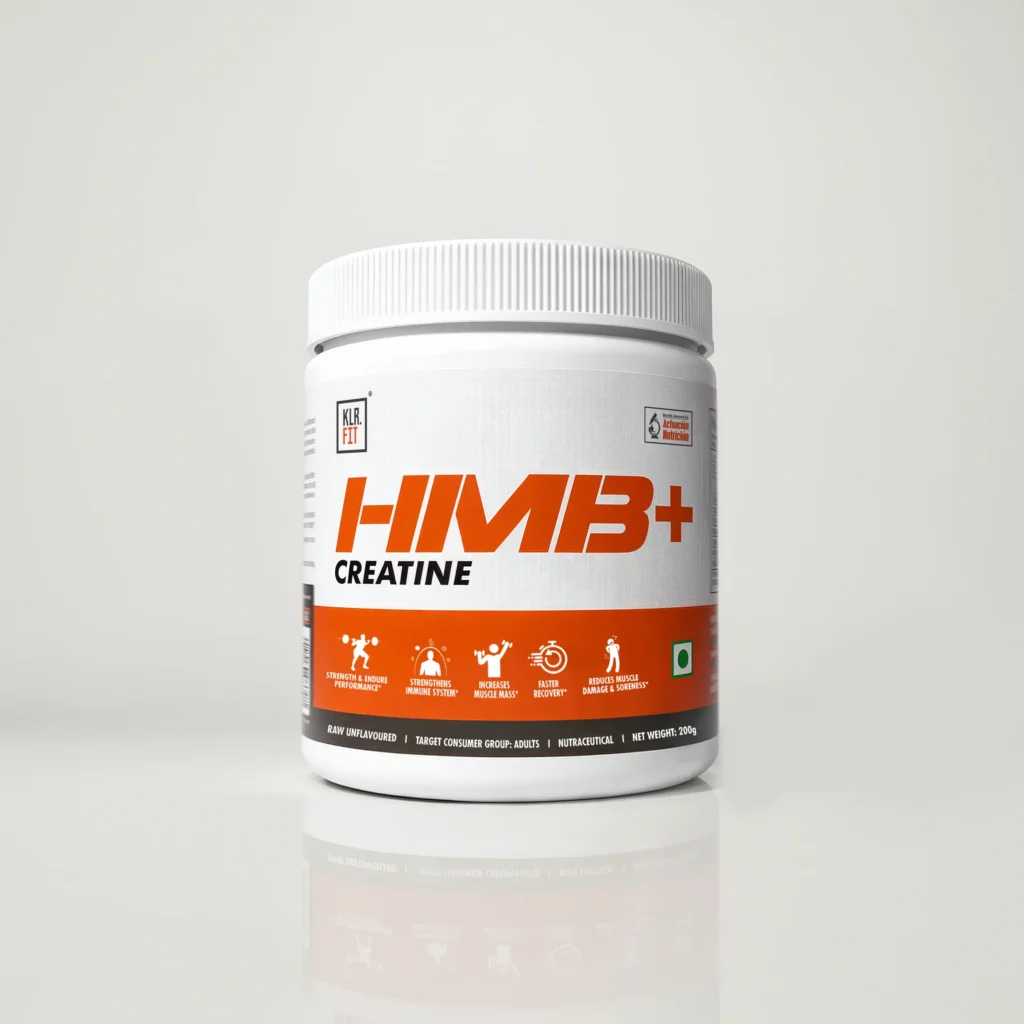
3,000mg CaHMB and 3,000mg Creatine Monohydrate in a single unflavoured 6g scoop, research-validated doses for muscle retention and strength output with zero fillers, excipients, or artificial additives
✓ Inhibits muscle protein breakdown via the ubiquitin-proteasome pathway, i.e. it protects what you train
✓ Replenishes phosphocreatine stores for greater force output and training volume per session
✓100% active ingredients, no artificial sweeteners, no fillers.
₹3,199.00 ₹2,079.00 35% OFF
In stock
Creatine
CaHMB
6g
33 Servings
THE SCIENCE BEHIND KLR HMB + CREATINE
Creatine and Phosphocreatine Resynthesis
Skeletal muscle stores ATP and phosphocreatine in limited quantities sufficient for approximately 8–10 seconds of maximal intensity effort. During this window, phosphocreatine donates its phosphate group to ADP, rapidly regenerating ATP and extending peak power output. Once phosphocreatine is depleted, force output drops and the muscle shifts to slower oxidative energy pathways.
Creatine supplementation increases total intramuscular creatine and phosphocreatine stores by 10–40% above baseline. This larger reserve extends the duration of maximal effort, reduces the rate of fatigue during repeated sprints or heavy sets, and accelerates phosphocreatine resynthesis between efforts. The downstream effect is more total training volume and a greater stimulus for adaptation.
HMB as a Leucine Metabolite
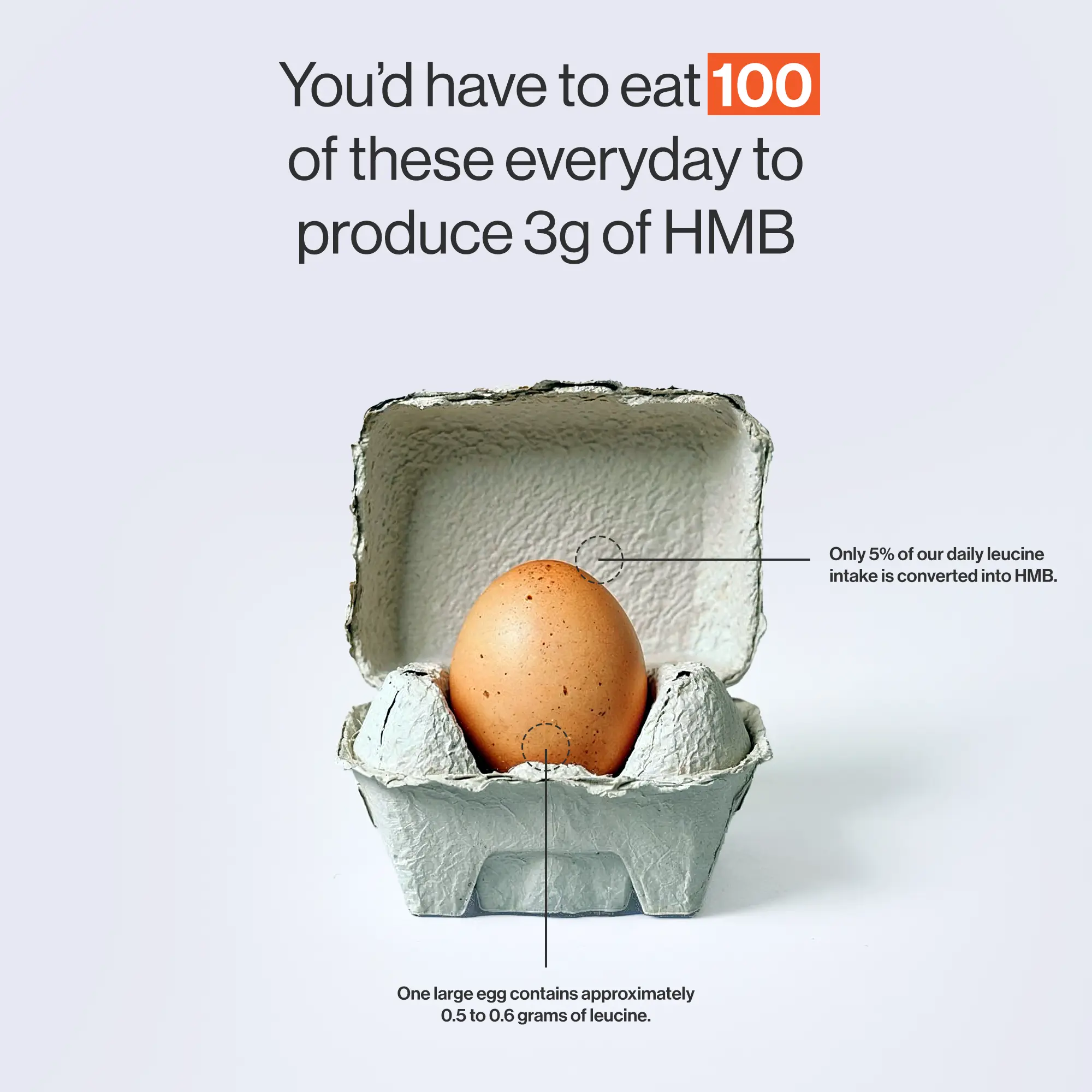
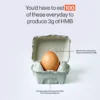
HMB is produced endogenously from leucine via an intermediate compound, alpha-ketoisocaproate. Dietary leucine intake, even at high doses, produces only trace amounts of HMB—approximately 300–400mg from a diet providing 10–12g leucine. Reaching the 3g research-validated dose through leucine intake would require consuming an implausible quantity of protein. Direct CaHMB supplementation bypasses this conversion bottleneck entirely.
The Ubiquitin-Proteasome Pathway and Muscle Protein Breakdown
Muscle protein breakdown is regulated primarily through the ubiquitin-proteasome system (UPS), a cellular mechanism that tags damaged or surplus proteins for degradation. Exercise, caloric restriction, illness, and aging all upregulate UPS activity, accelerating muscle protein breakdown. HMB inhibits this pathway through suppression of the E3 ubiquitin ligases MuRF1 and MAFbx, which are the primary executors of muscle protein degradation in skeletal muscle.
Creatine + HMB: Additive Effects
Both compounds independently support lean mass preservation and strength output through distinct, non-overlapping mechanisms. Creatine enhances ATP availability and training output. HMB reduces the catabolic response to that training. Several controlled trials have examined the combination and found additive effects on lean mass retention and strength gains, particularly in caloric deficit and in populations with elevated baseline catabolism.
CaHMB vs HMB Free Acid
HMB is available in two supplemental forms: the calcium salt (CaHMB) and the free acid. CaHMB has the larger body of clinical evidence supporting the 3g/day effective dose. It is chemically stable, absorbs reliably in powder form, and provides the additional elemental calcium contribution noted on the label. The free acid form achieves faster peak plasma concentrations but is primarily studied in liquid form, is less shelf-stable, and has limited comparative data in powder supplements.
HOW TO USE
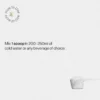
Mix 1 scoop (6g) in 200–250ml of cold water or any beverage of choice. The formula is unflavoured and blends cleanly into water, juice, or a post-workout protein shake without altering taste.
Timing
⚠ Consistency is Key
Consistent daily use is required to maintain elevated intramuscular creatine stores and sustained HMB activity. Creatine efficacy depends on saturation built over continuous supplementation.
✓ GOOD FIT FOR
Athletes in a Caloric Deficit
Muscle protein breakdown rate increases when calories are restricted. HMB’s anti-catabolic mechanism is most active precisely in this state. Creatine preserves strength output when training intensity is maintained through a cut. This combination directly addresses the two largest performance liabilities of a deficit phase.
Vegetarian and Plant-Based Athletes
Dietary creatine exists only in meat and fish. Plant-based athletes begin supplementation with intramuscular creatine stores 20–30% below omnivores and show the largest performance response to creatine loading. This population has the most to gain from consistent daily supplementation.
High-Frequency Trainers
Athletes training 4 or more days per week accumulate muscle protein breakdown across sessions faster than lower-frequency trainees recover from it. HMB reduces the degradation rate between sessions, improving the quality of each subsequent training day.
Intermediate and Advanced Lifters Managing Plateaus
Beginner strength gains are driven primarily by neural adaptation and require minimal recovery support. As training age increases, the gap between output and recovery becomes the primary limiting factor. HMB and creatine together address this gap directly.
Athletes Returning After a Layoff
Detraining elevates the ubiquitin-proteasome proteolytic pathway, accelerating muscle protein breakdown during periods of inactivity. HMB shows its strongest effects in populations with the highest baseline catabolism. The return-to-training window is exactly this scenario.
Older Athletes
Muscle protein breakdown rate increases with age independently of training status. HMB’s inhibition of the UPS degradation pathway is clinically relevant for this population and produces meaningful lean mass retention benefits at doses achievable through daily supplementation.
✗ NOT A GOOD FIT IF
You Are a Complete Beginner Within Your First 6 Months
Novice adaptations are driven primarily by neural efficiency improvements that do not require anti-catabolic support to manifest. The incremental benefit of HMB is smallest when baseline muscle protein breakdown is low and when training stimulus alone produces rapid adaptation. Spend the first training period establishing consistency before adding this layer.
You Are Looking for Acute Pre-Workout Performance Enhancement
KLR HMB + Creatine contains no stimulants, no nitric oxide precursors, and no ergogenics that produce session-by-session acute effects. Its benefits operate through cumulative saturation and daily consistency over weeks, not within a single session.
You Are Expecting Primary Mass Gain
HMB is an anti-catabolic compound. It preserves muscle tissue under conditions of breakdown. It is not a primary driver of muscle hypertrophy in well-trained individuals eating at or above maintenance. If the goal is maximizing muscle gain rather than protecting existing muscle, a higher-protein diet and adequate leucine intake produce a larger anabolic signal than HMB alone provides.
You Are in a Maintenance Phase With Low Training Volume and Adequate Dietary Protein
When caloric intake is sufficient, training frequency is low, and dietary protein is adequate, the anti-catabolic benefit of HMB narrows considerably. The product earns its place in high-stress training environments and restricted dietary conditions. In a low-stress maintenance phase, creatine alone covers most of the remaining performance gap.
₹3,199.00 ₹2,079.00 35% OFF
In stock



Reviews
There are no reviews yet.